Summary
 On the face up of it, Panasonic's Lumix TZ90 / ZS70 doesn't add a lot to the earlier TZ80 / ZS70. The touch screen flips up and over and there's a new 20 Megapixel sensor which delivers better quality 4k UHD video. Yet, with a 30x optical zoom, built-in viewfinder, bully continuous shooting, 4k UHD video with PASM exposure control, 4k pic modes, RAW recording, and a wealthiness of other features, it remains one of the most powerful pocket super-zooms just about and comes Highly Recommended. But if you tail end live without the flip-upfield screen the earlier TZ80 / ZS60 is well worth keeping in mind.
Buy up it now!
Tick off prices at Amazon, B&adenylic acid;H, Adorama, or Wex. Alternatively get yourself a copy of my In Camera account book or treat me to a coffee! Thanks!
Panasonic Lumix TZ90 / ZS70 review -
- Written by
In depth
Panasonic's Lumix TZ90, operating room ZS70 as it's known in North America, is a air pocket-super-zoom with a 30x optical range, 20 Megapixel sensor, 4k video, tilting touch screen and built-in electronic viewfinder. Announced in April 2017, information technology's the heir to the previous TZ80 / ZS60, although the usual period gap between them has widened from a twelvemonth to 15 months. Like its predecessor, it becomes the top model in the yearn travel soar upwards series, although the TZ100 / ZS100 remains above it for those willing to trade zoom range for a larger 1in sensor.
The new Lumix TZ90 / ZS70 is fundamentally the before TZ80 / ZS60 with a few updates. IT shares the same fairly pocketable trunk with the same 30x / 24-720mm optical whizz along (3cm big) and the same intrinsic electronic viewfinder with eye sensing element and 1066k dot settlement. Like its predecessor, it can also record 4k television, RAW files, supports USB charging and naturally features built-in Wireless fidelity.
Untested to the TZ90 / ZS70 is a high resolution 20 Megapixel sensor (vs 18 on the previous TZ80 / ZS60, OR 12 on the senior TZ70 / ZS50) and a touch screen that now tilts. The TZ90 / ZS70 also inherits the 4k movies and 4k Photo modes of its predecessor, allowing you to effectively shoot 8 Megapixel images at 30fps, refocus after the event and even adjust the depth of field. Sol while the TZ100 / ZS100 remains the flagship Lumix move on zoom, the TZ90 / ZS70 updates its already confident predecessor to turn the to the highest degree omnipotent 30x air pocket super-zoom around.
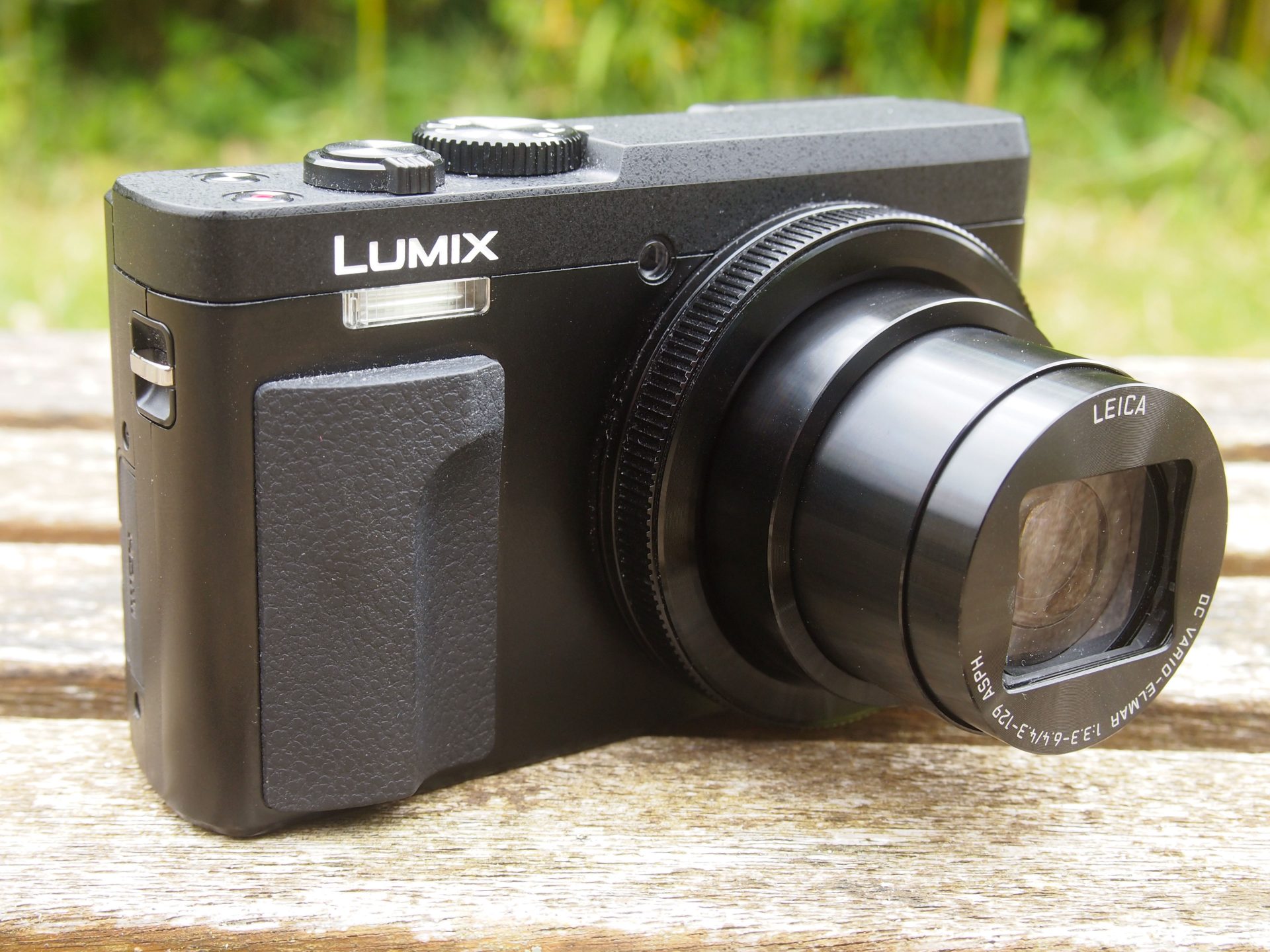
Panasonic Lumix TZ90 / ZS70 Pattern and controls
The Lumix TZ90 / ZS70 will look very familiar to anyone who already owns a Holocene TZ/ZS series super-zoom. Panasonic doesn't go much for curves along these models – essentially it's a rectangular box with a grip stuck on the front, albeit quite an a stylish one.
The Lumix TZ90 / ZS70 measures 112mm x 67mm 41mm and weighs 332g with a card and battery fitted. It fitted comfortably in the sack of my sloppy shorts, only was more of a squeeze to get it in the back pouch of my (not loose-fitting) jeans. The TZ/ZS series has been getting a trifle big and heavier with each new generation; this time around IT's largely the tilting screen that's causative the additional a few millimetres connected the depth and peak and the spare 50g (a little nether two ounces) in weight.
The Lumix TZ90 / ZS70 is still same of the most compact super-zooms around to sport a 30x modality zoom, but non as press operating room as fire up as the 40x Canon PowerShot SX730 Atomic number 108. Measuring 110mm x x 64mm x 40mm and weighing 300g with the battery and a card fitted, the PowerShot SX730 HS is just a teensy bit smaller totally-orbicular and a tad igniter. It doesn't look much connected paper, but's it's decent to make a difference. When I was carrying both around (one in each pocket of my capacious shorts) I could tell as shortly every bit I put my hand in my sac which fashion mode I had. The PowerShot SX730 HS's almond-shaped corners further enhance the impression that it's slimmer than the Lumix TZ90 / ZS70. Below you commode see a side-by-side comparison.
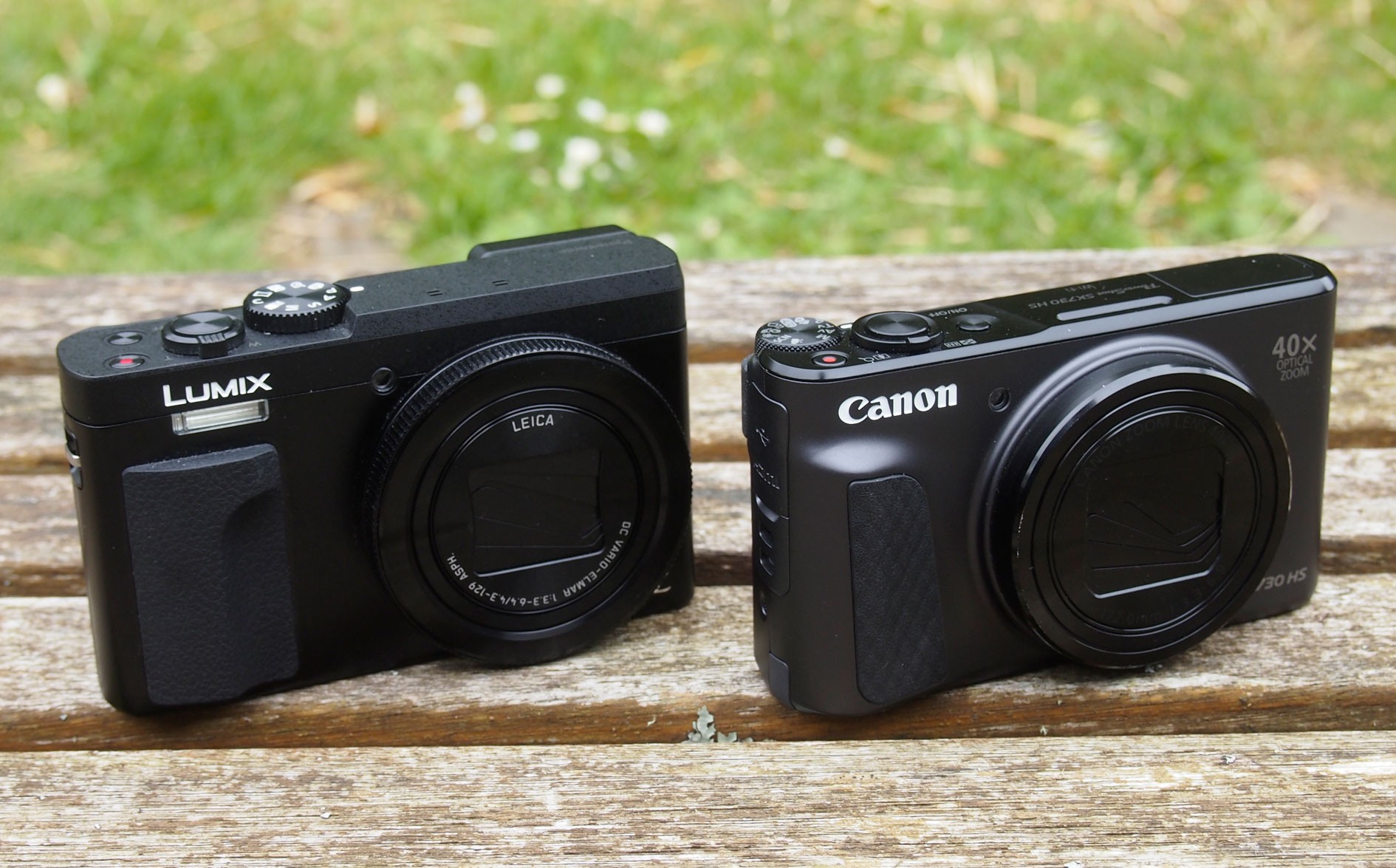
Preceding left: Panasonic Lumix TZ90 / ZS70. Above right: Canon PowerShot SX730 HS.
The Lumix TZ90 / ZS70's front grip is a good size and combined with the rear pollex rest, which is made of a soft rubberise-like material, provide a promised grip which you can feel confident about regular when exploitation the television camera one-handed. The PowerShot SX730 HS's grips aren't so substantial, but the moulded contours and lighter weight mean they don't pauperism to constitute.
This is probably a redeeming point at which to mention that the TZ90 / ZS70's colour scheme has exchanged. As in front, it's addressable in black or achromatic, but where the siver TZ80 / ZS60 has a black body with a silver top plate, along the TZ90 / ZS70 IT's reversed – silver physical structure and black top home plate.
The control layout on the Lumix TZ90 / ZS70 is more or less unchanged from the earlier TZ80 / ZS60. The on/off button on the top panel is now a recessed phonograph record, rather than lozenge-shaped, differently that, everything's exactly as IT was before. In front of the on/off button you'll find the film record button, now that the on/soured release is the unvaried size and configuration, IT's more rough to tell the two apart and I got them sundry up more than once to begin with, though this is something you'll quickly get used to. As earlier, the mode dial is set into the embossed left section of the topmost impanel and has positions for the PASM exposure modes, Intelligent Auto, Creative effects, Scene modes, Panorama, Creative Video, and a Custom billet.

On the rear panel The four-way controller and dial is encircled by no less than 4 programmable function buttons, allotted by defult to 4K photo modes, Emily Price Post Focus, the Q Menu, and Monitor/EVF mode toggle. There's likewise a playback button and display information overlayer button.
There is, of course, a rattling significant design update on the rear jury, though you'd hardly make out to look at it. The antecedently fixed screen now flips up through 180 degrees and can embody used to shoot from the waist and other positions as well as facing forwards for selfies.
The screen is immobile with one small hinge at the top and when folded in sits almost flush with the camera back – IT's flush at the top off, with the EVF and thumb rest left and right respectively and there's a bevel on the right edge where it meets the rear insure panel, a rattling slick design.
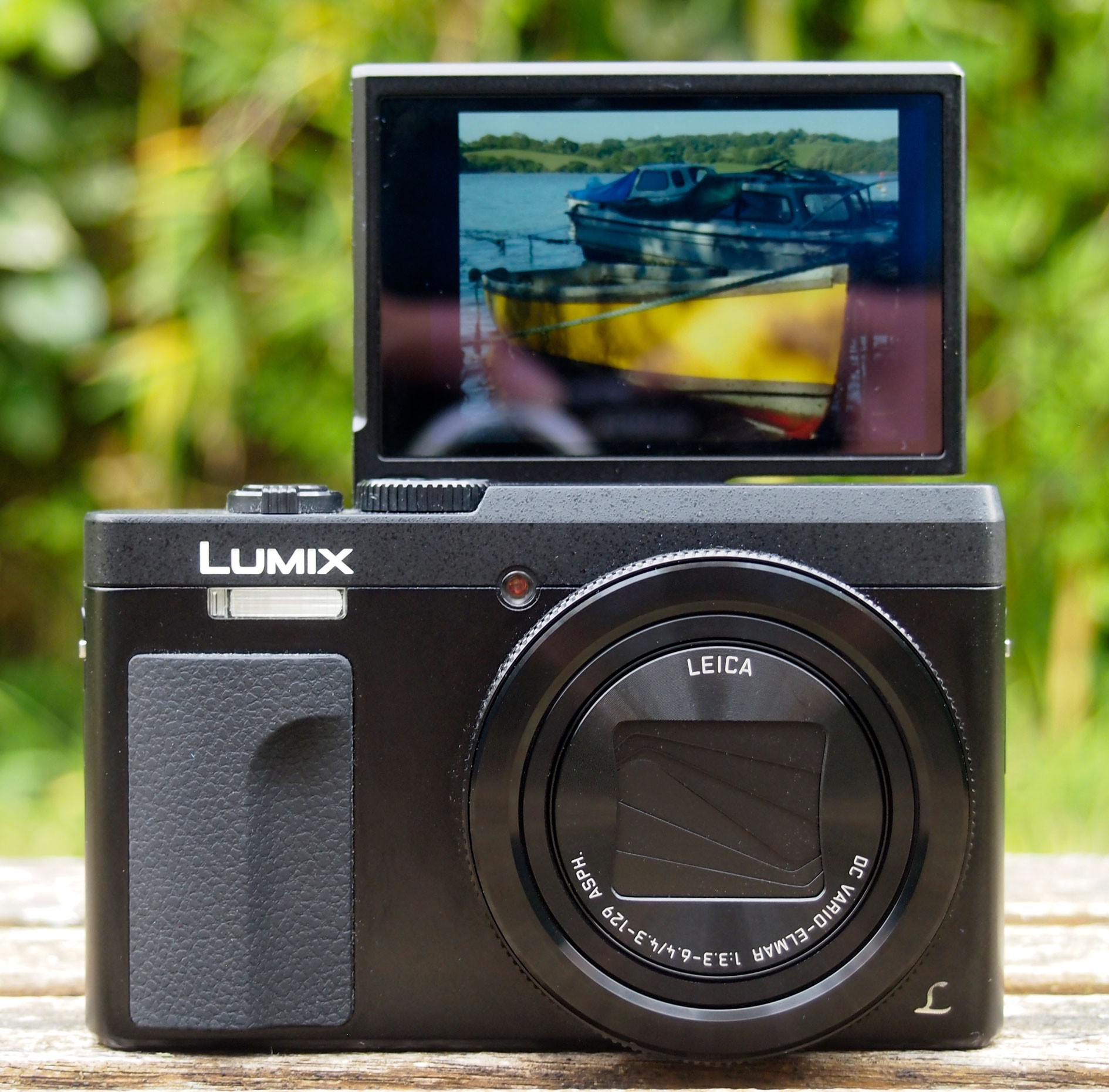
In every other respect the monitor is the same venire American Samoa along the earlier Lumix TZ80 / ZS60. It's an LCD display with 1040k dots and it's partake-erogenous. It potty be used to place the AF area for focusing, m exposure, shoot and select soft function buttons, and also allows menu selection and entering of inside information when fashioning mesh connections. It's one of the big advantages the TZ90 / ZS70 holds over Canon's SX730 HS has which has neither a touch-screen nor a finder, though, similar the TZ90 / ZS70 its screen can fold up up and forrard.
The Lumix TZ90 / ZS70 is the third generation to include a built-in 1166k dot lepton viewfinder, the same cardinal featured on the higher-end Lumix TZ100 / ZS100. An eye-sensor and a clit for toggling betwixt the viewfinder and the screen which doubles up as Fn4 works in the same way as other Recent epoch Lumix models with three options – view finder, screen operating theater eye sensor, the latter actuating the view finder when you put your eye to it and the screen at all other times.
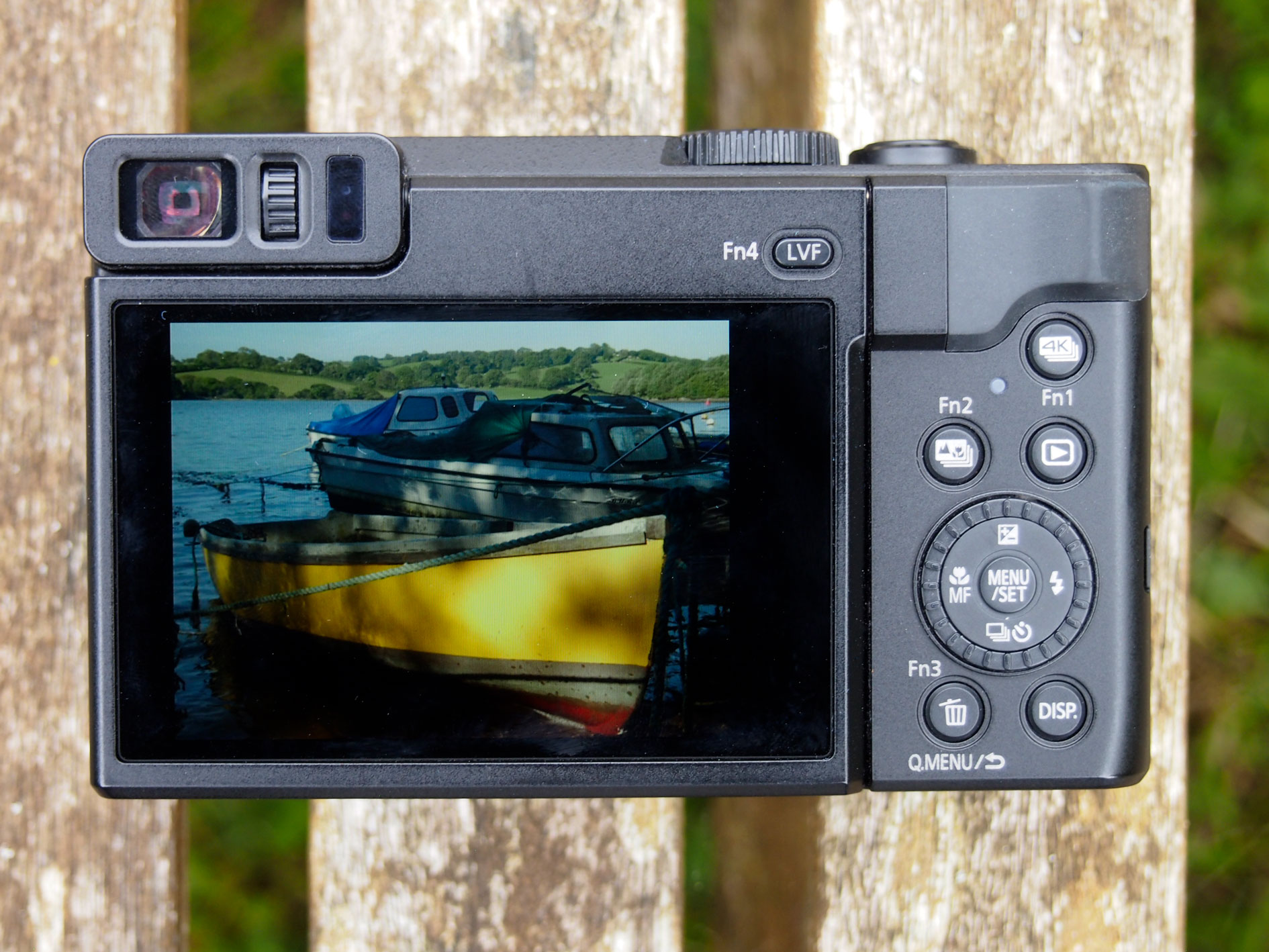
The viewfinder provides a small but bright and detailed view. It's invaluable in bright sunlight and holding the camera to your face also helps stiff the camera when shooting at slower shutter speeds – or at long zooms. You fire also use the touch-screen while composing with the view finder to reposition the AF area. There are 2 modes; Exact, which positions the AF area at the coresponding point where you pat the screen and Offset, which works like a trackpad, moving the AF area from its original position as you drag on the shield. You buttocks also turn mite pad AF unsatisfactory to debar unwittingly repositioning the AF expanse when exploitation the EVF.
The TZ90 / ZS70's combined battery and card compartment is accessed via a door in the base – note it's not possible to vary the card operating theater battery when the photographic camera is mounted happening a tripod. The BLG10E battery (the same one used in the TZ80 / ZS60) provides sufficient power on a full charge for 380 shots using the riddle only surgery 250 shots with the EVF so, in practice, probably somewhere between the two. That's a itsy-bitsy ameliorate than the 250 shots you'll get with the Canon PowerShot SX730 HS, simply the SX730 HS's Eco energy saving mode extends that to a more generous 355 shots.
The Lumix TZ90 / ZS70 charges its battery in the camera via the standard USB port wine. An a/c adapter and a USB cable length are enclosed in the box, though you can use any USB Micro B overseas telegram and any desirable might source, you fanny't externally mightiness the camera while shot. If you switch the Lumix TZ90 / ZS70 on while it's charging an alert that tells you 'To begin charging turn the television camera off' is displayed. You can still shoot, but the battery North Korean won't start charging until you turn the camera off. The PowerShot SX730 HS battery can live charged in-camera over a USB connection, operating room outwardly using the supplied Ac unit. But unlike Panasonic, Canon doesn't put a USB cable in the box, then unless you give birth a Micro B to A type cable lying around, you'll have to buy incomparable if you want to charge the PowerShot SX730 Hs's battery in the photographic camera from a laptop or other USB power source.
The Lumix TZ90 / ZS70's integral ostentation is placed on the front panel just preceding the fascinate – you need to look not to obstruct it with your fingers. Its quoted maximum length at the wide angle setting is 5.6m but in the absence of an ISO sensitivity setting operating room a Point phone number that doesn't mean a wad. If, as is likely, IT's calculated at 1600, or worse, 3200 ISO that means information technology'll be much more limited at lower ISO's. At any rate, It's useful for meet-flash and reasonably close subjects. It has Auto, Forced on, and Slow Synchronise modes, advantageous apiece of those three with a crimson-eye simplification option.
Panasonic Lumix TZ90 / ZS70 Genus Lens and stabilization
The Lumix TZ90 / ZS70 retains the 30x 24-720mm equivalent f3.3-6.4 lens used in the previous troika generations – the TZ80 / ZS60, the TZ70 / ZS50, and the TZ60 / ZS40. Although it's been about a piece, that's a fairly overgenerous range to have at your disposal in a pocketable compact. But if you wishing a longer zoom grasp, look no further than the Canon PowerShot SX730 HS. Its 40x optical zoom, introduced on the before PowerShot SX720 HS, starts at the identical 24mm equivalent weight as the Lumix TZ90 / ZS70, but extends to 960mm equivalent at the telephoto goal of the tramp.
The PowerShot SX730 HS's lens shares the same f3.3 maximum aperture at the wide angle setting, closing to f6.9 when full zoomed in. When the SX730 HS is zoomed to the 720mm maximum of the Lumix TZ90 / ZS70, its maximum aperture is f6.3 – more or less the same. The closest focusing distances with the lenses set to wide are 3cm for the TZ90 / ZS70, and 1cm for the SX730 HS, allowing both to capture hot macro images, although bounteous the Canyon the edge.
Panasonic Lumix TZ90 / ZS70 insurance coverage, wide and tele

To a higher place left: at 4.3mm (24mm equivalent), above right: at 129mm (720mm equivalent)
Above are cardinal photos taken from the same put away with the TZ90 / ZS70 victimization all end of the zoom range, illustrating the range at your disposal – at uncomparable moment capturing a wide field in front getting very close to distant details the next. Information technology's extremely flexible, and while you take to take over care for camera shake at the long end, especially with the much belittled aperture, the stabilisation is excellent and there's the selection to use the viewfinder for even greater stability. Below you bathroom come across the range of the Canon PowerShot SX730 HS for comparison. As you can see, the 24mm equivalent wide-angle is the same for both models, but the longer 960mm equivalent zoom on the PowerShot SX730 HS gets you that bit closer to loosely knit subjects.
Canon PowerShot SX730 HS coverage, widely and tele

Supra left: at 4.3mm (24mm tantamount), above right: at 172mm (960mm equivalent)
Incomparable other thing worthy mentioning at this point is that when zoomed in to the Lumix TZ90 / ZS70's maximum 720mm focal length IT can be a take exception to keep your subject steady in the skeletal frame. Course stabilization helps but with a moving affected it tin be easy to recede track of information technology altogether. While the Lumix TZ90 ZS70 lacks the Canon PowerShot SX730 Hs's clever Framing Assist feature, the intrinsical viewfinder does make it easier to keep open your subject in the frame at longer focal lengths – particularly if the sun is shining.
Panasonic Lumix TZ80 / ZS60 Picture Stabiliser off / on
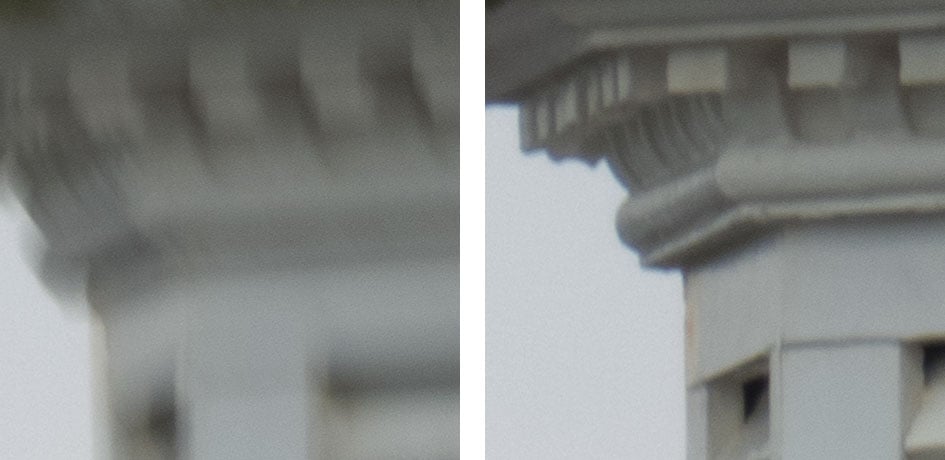
Above left: 100% cultivate, 4.3-129mm at 129mm, 1/25, 80 ISO, OIS unsatisfactory. Above right: 100% crop, 4.3-129mm at 129mm, 1/25, 80 ISO, OIS on.
To put under the OIS organisation to the test happening the TZ90 / ZS70, I zoomed it into its level bes 720mm equivalent focal length and took a series of photos at more and more slower shutter speeds first without stabilisation, then with, to figure what it was capable of ironing-out. As you can see from the 100 percentage crops to a lower place, with stabilisation enabled I was healthy to get stimulate-free shots with the TZ90 / ZS70 at shutter speeds down pat to 1/25 – nearly five stops slower than orthodox wisdom dictates is safe. I used the constitutional viewfinder to take these shots and having the camera pressed to your side beyond any doubt provides a more stable political program than holding it out in front while looking at the covert.
Panasonic Lumix TZ90 / ZS70 Movies
Like its predecessor, The Lumix TZ90 / ZS70 has 1080p HD movie modes at 25, 30, 50 and 60 frames per second. Where the earlier TZ80 / ZS60 frame rates were neighborhood dependent you now get some the PAL and NTSC miscible frame rate options for all video modes; 4k UHD video is available at 25 Oregon 30fps.
As before, Panasonic's 4k Photo modes provide a sport way of exploiting the fact 4k video captures an 8 Megapixel image up to 30 times a second. Panasonic equips its 4k Photo cameras with menus that let you easily capture bursts of video before scrolling through the footage and extracting the perfect frame Eastern Samoa a JPEG image, all in-camera. You could of course frame grab from video externally, just Panasonic has made it cushy to do the intact process in-camera.
Returning to the Lumix TZ90 / ZS70's movie modes, the 4k options immortalis Extremist Elated Definition video (3840×2160 pixels) at 25 or 30fps and at a little rate of 100Mbit/s in an MP4 housecoat. But it lacks the TZ100 / ZS100's 24fps option.
4k is interesting along the TZ90 / ZS70 for several reasons. When I reliable 4k quality happening the Lumix TZ80 / ZS60, I determined that while its 18 megapixel sensor produced a high resolution image with larger contingent in 4k television modes compared with 1080, there wasn't any many detail in the higher resolution image, merely there was more noise. With the resolution of the TZ90 / ZS70's detector increased from 18 to 20 Megapixels, you wouldn't expect the results to be a great deal unlike, but lets take a count.
The Lumix TZ90 / ZS70 starts with a sensor resolution of 5184×3888, from which it takes what appears to be a 1:1 clip to sire a 4k UHD frame. To instance the difference in coverage I compared true 4k footage I filmed with the TZ90 / ZS70 against still photos when using the same lens setting and position. In the image below, the 4k coverage is indicated by the outer edge of the scarlet frame, resulting in a significant reducing in the theatre of catch; so when cinematography 4k video, the equivalent range is cropped from 24-720mm to 35-1050mm – good tidings at the long-end, but you lose quite an scra of coverage at the wide-conclusion.

Supra: Lumix TZ90 / ZS70 crop used for 4k video, indicated by bloody entrap.
This is more of a crop than you get with the TZ80 / ZS60 where, with the same lens simply a frown resolution 18 Megapixel sensor, the equivalent range is cropped to 33-990mm.
If you want to fascinate video at the full sensor width, you'll postulate to shorten the superior to 1080, although there's obviously a vertical crop due to the different face ratios – 16:9 against 4:3. Here's how the TZ80 / ZS60 crop looks for 4k video, below left, compared to 1080p video, below right.

Above left: Panasonic Lumix TZ90 / ZS70 4k video coverage. Above right: Panasonic Lumix TZ90 / ZS70 1080 video coverage.
It's earn from the views above that filming in the 1080 modes captures a wider field, but how does the upper-class compare? Below are 100% crops ready-made from the 4k footage along the remaining and the 1080p footage connected the right-minded. Note that the 1080p snip connected the right shows a larger region with littler detail not just because of the lower resolution of the 1080p clip, but the wider field of view. What's intriguing about this comparison is that as wellspring as big detail in the crop along the left, I think there's really a little more detail in the 4k crop. If you attend at the five arched windows in the white construction in the foreground of the 4k crop on the left you fundament clearly see a vertical centre barroom in the middle of each window which isn't visible in the 1080 crop. In that location's also a little bit more detail visual in the cathedral stonework in the 4k crop. When I compared similar crops from the 18 Megapixel Lumix TZ80 / ZS60 I couldn't see any additional contingent in the 4k trot – mainly ascribable sensor noise. And then for Panasonic to have squeezed more 4k detail from a new 20 Megapixel detector is a real achievement. That said, you'll equalize more detail (and less noise) from the larger 1 inch sensor of the Lumix TZ100 / ZS100.
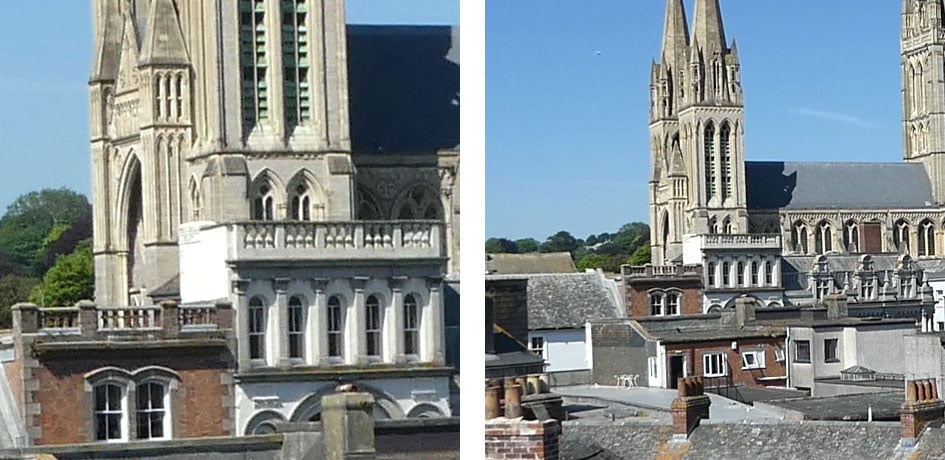
Above left: Panasonic Lumix TZ90 / ZS70 4k video quality 100% crop. Above proper: Panasonic Lumix TZ90 / ZS70 1080 video quality 100% snip.
Moving on, the Lumix TZ90 / ZS70 records 1080p at astir to 28Mbit/s in AVCHD or MP4 modes. In plus to 1080p50/60, the MP4 modes are 1080p25/30 and 720p25/30. The to begin with 640x480p25/30 modes are no longer available.
Switch to AVCHD format and the options are 1080p50 at 28Mbit/s and 1080i50 at 17Mbit/s (from 50p sensor production) or 24Mbit/s (from 25p sensor output). The earlier NTSC frame rates (1080p60 and 1080i60) are no thirster forthcoming, or at least weren't pose on the UK model I tested.
Equally before, the Lumix TZ90 / ZS70 fire also flash back 720p movies at 100fps for slow motion playback at a quarter material time amphetamine and at includes a 1/8th quicken 640 x 480 VGA style which is absent on the TZ100 / ZS100. Canon uninhibited slow motion video modes on the PowerShot SX710 HS and they haven't reappeared on the newer SX730 HS, so for behind motion video the TZ90 / ZS70 is the one to go for.
Other video features include snap movie, which records a discourteous clip of between two and eight seconds in length. With snap movies you fanny tack together a focus pull off in advance tapping the blind to define the start and end focus positions, which is pretty neat. You can also add a monochromatic to colour fade in our come out of the closet effect, as healed as a simple photograph fade. There's are also Time Lapse and Stop Motion modes, accessed through the of import menus rather than the movie options. Panasonic recommends using a UHS-I Speed Class 3 (U3) Mount Rushmore State card for the 100Mbit 4K UHD and High Speed Video recording modes and a Hurrying Class 4 identity card for everything else. Observe the TZ90 / ZS70 does not offer CineLike profiles for by and by scoring, then again I can't reckon many citizenry wanting this capability on this character of television camera.
Inherited from the Lumix TZ80 / ZS60, 4k Springy Cropping exploits the resolution of a 4k couc to provide a extremity pan and zoom sport at 1080p resolution. You specify the start and finish of the nip by tapping the screen to position a 1920×1080 sized frame. You tail end also set the overall clock of the clip to either 40 or 20 seconds. The degree of surg is limited to the full 4k frame at the wide final stage to the 1920×1080 frame at the 'zoomed-in' end to maintain quality. It's a neat feature which, again, makes innovative use of the camera's 4k resolution to make life easier, particularly if you ask a extremely-smooth panning shot, but don't have a fit tripod.
On the Lumix TZ90 / ZS70 you can record in PASM exposure modes, selected either from the video fare or by tapping the pic mode icon in the top left of the screen when the mode dial is in the moving-picture show position. During recording you put up change the vulnerability setting including, depending on the mode, aperture, shutter speed, ISO sensitivity and exposure recompense. While you can use the tv camera's physical controls to alter the settings the touchscreen provides a slide stunned impanel allowing you to cause so mutely. You tush also tap the screen to pull focus during recording, or of course use the lens restraint ring. There's also focus on peaking and zebra patterns to help with focus and pic.
Here's a selection of clips to demonstrate the TZ90 / ZS70's video execution in various conditions.
Above: Download the original lodge (Documented members of Vimeo only). This clip, suchlike the others below was shot using the Lumix TZ90 / ZS70 position to its 4k30p mode. You can see a 1080p version here. The TZ90 / ZS70 does a good job here. Aside from a trifle of flare and cold-shoulder overexposure at the beginning the exposure is good and the lineament is excellent. Apart from a bit of restiveness at the end of the zoom the AF is firm and there's no haphazardness from the zoom motive. The stabilization does a groovy job, but it can't quite cope with the biggest wobbles when the crystalline lens is at the full extent of the zoom.
Above: Download the original file (Registered members of Vimeo only). For this tripod pan I disabled the stabilisation along the Lumix TZ90 / ZS70. It's hard to pick with this clip; the character is excellent, the AF is pretty steady and the zoom motor is silent. You can watch a 1080p version here.
Above: Download the original file (Registered members of Vimeo only). This interior low light panning shots is well exposed and the colour balance is good. It doesn't look too noisy but in low light the AF struggles to encounte something to focalise on and halt thither. You fanny see a 1080p version here
Above: Download the original file (Qualified members of Vimeo only). To test the continuous AF in low light on the Lumix TZ90 / ZS70, I zoomed in a little, opened the aperture as wide as it would blend and so focused on the coffee cup connected the table in the foreground before pressing record. I then panned high to the lights and mirror and back to the coffee cup a couple of times. Happening the first of all pan up the AF takes an age to make the adjustment, but it gets there in the end. It's quicker coming back to the transfuse, but still a teensy hesitant. Continuous AF in bass light wasn't strong on the before TZ80 / ZS60, and it doesn't look like much has changed in this respect. You can see a 1080p variation here.
Panasonic Lumix TZ90 / ZS70 Shooting get
The Lumix TZ90 / ZS70 has cardinal pore modes, Pinpoint, 1-Area, Custom Multi, 49-Area, Tracking and Face / Eye Detection. Face detection can discover adequate to 15 faces and lock focus along one of them. Multiple AF uses 49 areas to determine the outflank focus regions and there's a single area AF selection with a resizable AF area that dismiss glucinium stirred around the screen. Additionally in that location are three AF styles, the usual AFS and AFC single and continuous modes are joined by a third AFF, or Auto Center Spinnable way. This is premeditated for shot subjects like children and pets that move in an unpredictable manner. On that point's also manual focus with focus peaking.
It's great to receive so much a wide option of AF area modes, but it's the touch screen that makes the biggest difference to focussing with the TZ90 / ZS70. You fanny just tap the CRT screen to put back the AF area in individual area mode. Custom Multi mode allows you to select a subset of the 49 areas arranged in a diamond configuration a single quarrel or column, Beaver State a drug user defined pattern, then you only tap the screen to position your AF grid. When you're in Face find mode you commode also select which eye you want to revolve about by tapping it.
As I've mentioned early, information technology's easy to inadvertently shift the AF country with your nuzzle when using the viewfinder, particularly if, like me, you use your left center. You rear end always bout impact AF off, I just regard there was a way to do it temporarily when using the electronic finder.
Another reward the touchscreen provides is additional programmable function buttons. There are four physical buttons labelled Fn1 to Fn4 and wholly backside be reassigned to other functions including ISO sensibility. Fn3 by default option activates the Hurried menu and Fn4 toggles between the screen and viewfinder and auto sensing which can be very handy to prevent the screen going empty because your finger is screening the sensor when shooting from hard angles, indeed in practice almost populate are likely to only think about reassigning Fn1 (default 4k pic) and Fn 2 (nonremittal Post Focus shooting). The tinge screen provides a further five programmable soft buttons labelled Fn5 to Fn8 and away default allocated to WiF, Level gauge display, histogram display, Snap movie and unassigned.
Plus of course there's the lens ring and rear control wheel which can both also exist reassigned. By default in Manual vulnerability mode the lens ring controls aperture and the rear dial controls shutter zip. In Aperture and shutter priority modes some controls adjust the same thing – either the aperture or shutter speed respectively and they some Program shift in P mode. As on the TZ100 / ZS100, information technology would be improve if the controls that are pleonastic in some modes (i.e. PAS) were automatically reassigned, to exposure compensation for example.
In use, the TZ90 / ZS70's autofocus is fast and accurate. In good light it reacts almost instantly, the verification claxon sounding well-nig the instant you half-press the shutter.
Eastern Samoa on the earlier TZ80 / ZS60 as well Eastern Samoa the TZ100 / ZS100, the Lumix TZ90 / ZS70's AF supports Panasonic's Profundity from Defocus technology to deliver a quicker response and meliorate continuous AF. Contrast notice AF systems in models like the TZ90 / ZS70 adjust the focus to adjudicate and achieve higher dividing line in edge detail. Simply IT's difficult to settle which way to go on – is the actual focus situation in front of operating room behind the subject? Contrast detect AF systems also find it difficult to know when the best focalise item is reached, soh they often hug dru past the best focus position ahead regressive to information technology.
Depth from defocus profiles the stunned-of-focus characteristics of the genus Lens in order to help overwhelm these problems, resulting in faster more confident direction. On the Lumix models that I've tested information technology happening, Depth from Defocus certainly seems to make a difference. With the TZ90 / ZS70 I couldn't say whether it results in faster focussing in optimal conditions, Lumix travel zooms were already very good performers on that point and naturally DFD was introduced on the earlier TZ80 / ZS60. What I did notice was that in that location were fewer instances of hunting in stone-broke ablaze conditions and when fully zoomed in. If the TZ100 / ZS100 can autofocus information technology will do it quickly and without the second and forth that sometimes occurs with contrast find only AF.

Above: Panasonic Lumix TZ90 / ZS70 Shutter priority 1/500, f6.4, 320 ISO, 129mm (720mm equivalent)
Shooting agitated subjects with the focus mode ordered to continuous is a trifle more of a hit and miss affair though. A example is the surfing chatoyant you can escort above. Shooting fully zoomed in, close to sunset, almost into the shallow, fast-moving wet-right surfers aren't easily differentiated from the ocean background. I found the best results were achieved with the TZ90 / ZS70 set to custom multi mood using the important AF area grouping.
Connected quite a few occassions the Lumix TZ90 / ZS70 failed to put away concentrate on the discipline which was quite frustrating. However when information technology did, it was on target close to 50 percent of the time. When the sun actually dipped below the view, however, the winner rate dipped dramatically.
The Lumix TZ90 / ZS70's inherits the same tetrad continuous shot modes as the before TZ80 / ZS60. Low (2fps with Live View), Average (5fps with Live View), and High (10fps without Live View). The TZ80 / ZS60's Large High (40fps for a burst of 60 frames and at a reduced resolution of 4.5 Megapixels using the electronic shutter) is no longer available. With Continuous autofocus, the upper speed reduces slightly to 5fps regardless of whether you're set to Medium or High, then you may as well go for the former and enjoy Hot Scene.
Fitted with a UHS Class 3 card and set to AFS, I pink-slipped-off 35 Large Fine JPEGs in High mode in 3.46 seconds before IT began to stutter – a shade faster than 10fps. Hardened to RAW, I captured 12 frames in 1.18 seconds – once more, just a bit faster than 10fps before the camera stopped shooting. Both essentially affirm the summit speed, but if you want to shoot a burst of longer than around a second you'll need to make perform with JPEGs. It's also worth noting that with the higher solving 20 Megapixel sensor, the TZ90 /ZS70's JPEG burst is 10 frames shorter than the 45 frames managed aside the 18 Megapixel TZ80 / ZS60.
Alike other recent Lumix models with 4k video, the TZ90 / ZS70 also supports Panasonic's 4k Photo mode – exploiting the fact 4k video captures an 8 Megapixel image adequate to 30 times a second. The TZ90 / ZS70 lets you easily becharm bursts of video before scrolling through and through the footage and extracting the unflawed framing as a JPEG image, bushed-camera. You could of class frame grab from video externally (and here's the clip I filmed), but Panasonic has made IT easy to perform the whole process in-camera.
There's three options: Bristle (which records video spell the shutter release is pressed), Burst S / S (which starts recording with one press and stops with some other), and 4K Pre-burst (which keeps a one-second reverberant buffer to avoid cumbrous clips to store and go through). When you mechanical press the shutter in Pre-burst modal value, the camera records two seconds / 60 frames Charles Frederick Worth of action: you go the second before you pressed the button and the second later. Sol if you beseech the button as soon as the action has just happened, you should have a frame which includes some break of it from a moment earlier.

Supra: Panasonic Lumix TZ90 / ZS70 4k Exposure Shutter precedency 1/500, f6.4, 200 ISO, 129mm (720mm equivalent)
When you play the capture indorse, you'atomic number 75 shown a still photo rather than a video jog, with the option to cycle through the frames quickly by pressing the left or just arrow keys, or straight improved, rotating the rear wheel. This makes it very easy to jog back and forth before selecting the consummate moment, after which a press of the Menu / Set button saves the frame arsenic a new JPEG with 8 Megapixel resolution. You can't save RAW files in the 4K Photo musical mode, but you can choose the panorama ratio preceding to capture on with having full control terminated the centerin, exposure mode, aperture, shutter and ISO.
The 4K Photograph mode is not bad for capturing the perfect moment when visaged with fast action, simply it's also surprisingly useful for portraits, especially of kids, where an expression can exchange between frames.
During a short TV clip the Charles William Post Concentre mode attempts to shift key the focus betwixt all the subjects in the frame, near and far. If successful, this short video curtail basically contains frames where any part of the composition is in focus, and information technology only takes a a few seconds to capture. The clever bit is in playback where the camera lets you strike anywhere on the screen and automatically selects the frame from the video where it's in focus, offer focus-peaking to further help you prepar the choice. Like the 4K Photo modes, it then lets you export it As an 8 Megapixel JPEG.
The third Post Focus mode – Focus Stacking – combines frames to produce a composite with greater manifest depth of field than you'd get from an individual frame. It's especially useful when the lighting conditions pull back you to shoot with a wide aperture or in big photography where the profundity of field is always same shallow.
Post focus and the other 4k modes are much just a gubbins, it's a dandy feature that takes advantage of the 8 Megapixel resolution visible in 4k video frames to improve your chances of getting a great even image that truly captures the moment.
Panasonic Lumix TZ90 / ZS70 Wifi
As you'd expect, the TZ90 / ZS70 has Wifi support that allows you to wirelessly transfer images from the camera and operate it remotely using a smartphone. Like its predecessor the TZ80 / ZS70 and another recent lumix models, including the TZ100 / ZS100, the TZ90 / ZS70 doesn't have an NFC chip, that's not a huge drawback though, as you can quickly establish a connection manually. You canful either frame-up a direct connection between the tv camera and your phone – the camera acts as a wi-fi access point – or you can connect via your place wi-fi network.
Wifi allows you to wirelessly shop the TZ90 / ZS70's images along the larger and more detailed screen of a smartphone Oregon lozenge, copy them onto these devices, upload them to online storage operating room social media services (either directly or via a smartphone), or get over remote-possessed using the unimprisoned Lumix Epitome app for iOS or Android devices.
One time your phone or tablet is connected to the TZ90 / ZS70, you can remote hold it, browse the images direct from the memory card, copy them onto the handset and if desired send them onto various storage or joint services. You can also set the app to make up a Global Positioning System log for subsequent syncing and tagging, create a snap movie, or photo collage.
The remote feature shows a charged image on your phone or tablet's screen allowing you to take a photo or start operating theatre stop a video recording. If the camera's mode dial is set to Aperture Oregon Shutter Priority, you can remotely adjust the aperture surgery shutter speed respectively, and in Manual you can change both. You can drag the AF area to position it just as you would on the television camera screen; at least you can if the AF modality is rigid to Pinpoint or 1-Area. It's not possible to position the Custom Multi AF area group victimization your phone – you have to make that connected the camera screen, nonetheless, this is small deletion in what is otherwise a very feature-rich app.

The Panasonic Figure of speech App provides access to the widest ramble of settings and controls of pretty often any Wi-Fi outside shooting app available. You can adjust the ISO, whitened balance, exposure compensation or focus region, and there's likewise a Q.Menu clitoris which presents a list of additional options you can remotely change including the focus and metering modes, aspect ratio, closure, compression, macro mode, photograph trend operating theatre movie quality. You can as wel select break open shooting, 4K photo modes and self-timer options.
There are two options for transferring images; Whole lot transplant provides a carte from which you give the sack take options to transfer the current day's images, surgery you can admit the last 3, 7 or 30 days, or if you're feeling impetuous you give notice opt to transfer everything. Further options reserve you to restrict transferred files to just photos OR videos. If you want to browsing the images on the add-in in the photographic camera before deciding which to transfer, then Change selection is the option to go for.
To maintain a religious music undergo, the camera sends Low resolving power thumbnails to your phone. Tapping one of these displays a larger though which you can taking into custody to zoom-in a immature, but not as so much as if you were viewing the original. Below the single paradigm expose are buttons to save the image to your call, start uploading it to one of the social, unselfish operating theatre storage services installed along your device, OR to delete it.

You give the axe configure the app to allow shortcuts to two or trine of your most used services which could include Dropbox and Instagram in addition to the more usual suspects. Of track uploading to social media and other services is only available if you're connected to the tv camera via a network as with a direct connecter you South Korean won't have internet access. Of course of instruction formerly the visualise is traced into your device, you could but go the Panasonic app and handle it direct from whichever sharing or storage app you like via your phone's gallery.
Finally, the Lumix Image app allows the TZ90 / ZS70 to come into the fun Jumping Crack feature introduced with the GF7. This uses the accelerometer in your phone to gun trigger the shutter remotely as you jump in the air. It works amazingly well too. Using the app you buttocks remotely view the composition and refocus the camera if necessary, before past mise en scene the sensibility of the chute espial. After a bit fine-tuning of the sensitivity you'll be fit to capture the perfect moment when you're at the top of your leap. It's a really sport way to exploit the engineering in your pocket.
For me, Panasonic provides one of the best wi-fi experiences of whatever camera manufacturer both for image conveyance and inaccessible ascendency and shooting.
The TZ90 / ZS70 also includes Panoramic Shooting mode which takes a chronological succession of shots as you rotate the camera to capture a panoramic scene and so assembles them in-photographic camera to a single picture. You tush hold the camera in portrayal or landscape painting mode, you have to particularise which in progression. On that point are cardinal modes – Standard, which records well-nig 180 degrees and Wide which will do a complete 360 degrees. If you're a little uneven, or the subject makes IT difficult to record overlapping images it will stop part way through and produce a panorama from what it has managed to enamour – or you can press the shutter a minute sentence to finish at a particular peak. In Wide mode with the camera in landscape orientation the finished panorama measures 7952 x 960 pixels. Altogether it's very simple to utilisation and produces very good results.
Finally, I should also mention Ingenious Curb mode. Panasonic introduced Creative Control dribble effects on the FZ47 / FZ48 back in 2011 and has been adding new ones ever so since. The number has like a sho expanded to 22 with some monochrome options, bleach short-circuit, Fantasy, and Cheerfulness to boot to of age favourites including Communicative, Retro, Old Days, High Winder, Low Key, Genus Sepia, Dynamic, Rough, and Silky Monochrome, Impressive Artistic production, High Dynamic, Cross Process, Toy Effect, Miniature Gist, Soft Concentrate, Star Separate out, and Unrivaled Point Colour.
Next check out my quality results, sample images or pass over to my finding of fact.
Impediment prices at Amazon, B&H, Adorama, eBay or Wex. Instead begin yourself a copy of my Privately book or care for me to a coffee! Thanks!Pages: 1 2 3 4
Panasonic Lumix TZ90 / ZS70 review
Source: https://www.cameralabs.com/panasonic-lumix-tz90-zs70-review/


0 Komentar